Stories that earn trust before you say a word.
Case studies across founder, brand, nonprofit, enterprise, and entertainment — from a single first video to a decade with Disney.
When the Doctor
Becomes the Patient
How Two Physicians Turned Their Own Frustration Into a Multi-Million-Dollar Company

The Situation
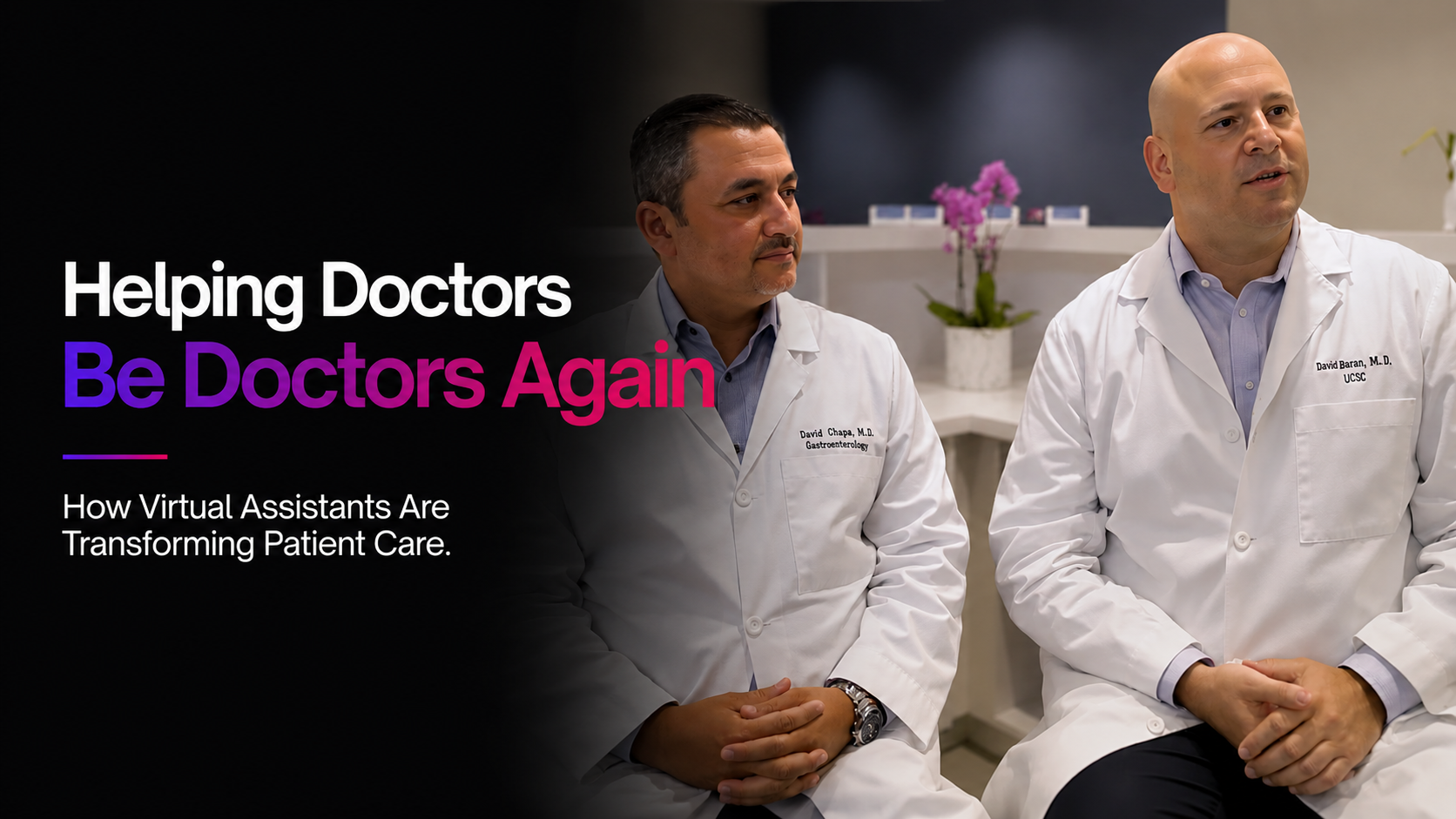
Stephen Kupferman is a board-certified oral and maxillofacial surgeon. Omid Shaye is a board-certified gastroenterologist. Between them, decades of specialized training, licensing, and clinical expertise. They know how to diagnose. How to operate. How to manage a patient through the worst moments of their life.
Nobody taught them how to run an office.
But that's what the job had become. Managing staff. Chasing billing. Handling compliance. The administrative burden of a modern medical practice doesn't announce itself — it accumulates, quietly, until the day a physician realizes he's spent eight straight hours at work and hasn't seen a single patient.
That was the day MedVA started. Whether they knew it yet or not.

The Challenge
MedVA is a company built on a simple insight: most of what happens inside a medical office doesn't actually need to happen inside a medical office. Tasks that have always been done in-person can be done remotely — efficiently, reliably, and at a fraction of the cost.
That's a compelling business case. It's also, on its own, completely forgettable.
The real asset wasn't the product. It was the founders. Two practicing physicians who didn't stumble onto a market opportunity — they lived the problem, solved it in their own practices, and then built a company because they couldn't imagine leaving every other doctor in the same position they'd been in.
The challenge was making sure that came through. Not as a pitch. As a story.
What We Uncovered
When we sat down with Stephen and Omid, we kept pushing past the company narrative toward something more specific: What did it actually feel like before?
What came back was a portrait of a profession under quiet, relentless pressure. Staff stretched past their limits. Morale eroding in ways nobody named out loud. Doctors who had given years to a calling, now spending their days on tasks that had nothing to do with why they showed up in the first place.
The turning point wasn't strategy. It was a realization — almost accidental — that things could be different. That the tasks consuming their days could be handed to someone they'd never have to house, onboard the usual way, or pay at traditional rates. Once they saw it work in their own offices, the company wasn't a plan. It was an inevitability.
That's what the video needed to carry: not the features of the product, but the moment of recognition that launched it. Because that same moment is what every physician watching the video is waiting to have themselves.


The Result
MedVA launched as the first company dedicated to placing virtual assistants in healthcare practices. It grew quickly — into a thriving, multi-million-dollar business that continues to expand.
The founders' video didn't just introduce the company. It made the case from the inside. When a physician watches it, they don't see a product demo. They see themselves — six months ago, a year ago, the week they almost quit. That recognition is what moves someone from viewer to client.
One story. Sixty seconds. A company born.
The right founders' story doesn't explain why someone built something. It makes you feel why they had no other choice.
The Coach
Behind the Coach
How a TEDx Speaker and Executive Leadership Coach Finally Got a Video That Matched Her Depth
The Situation
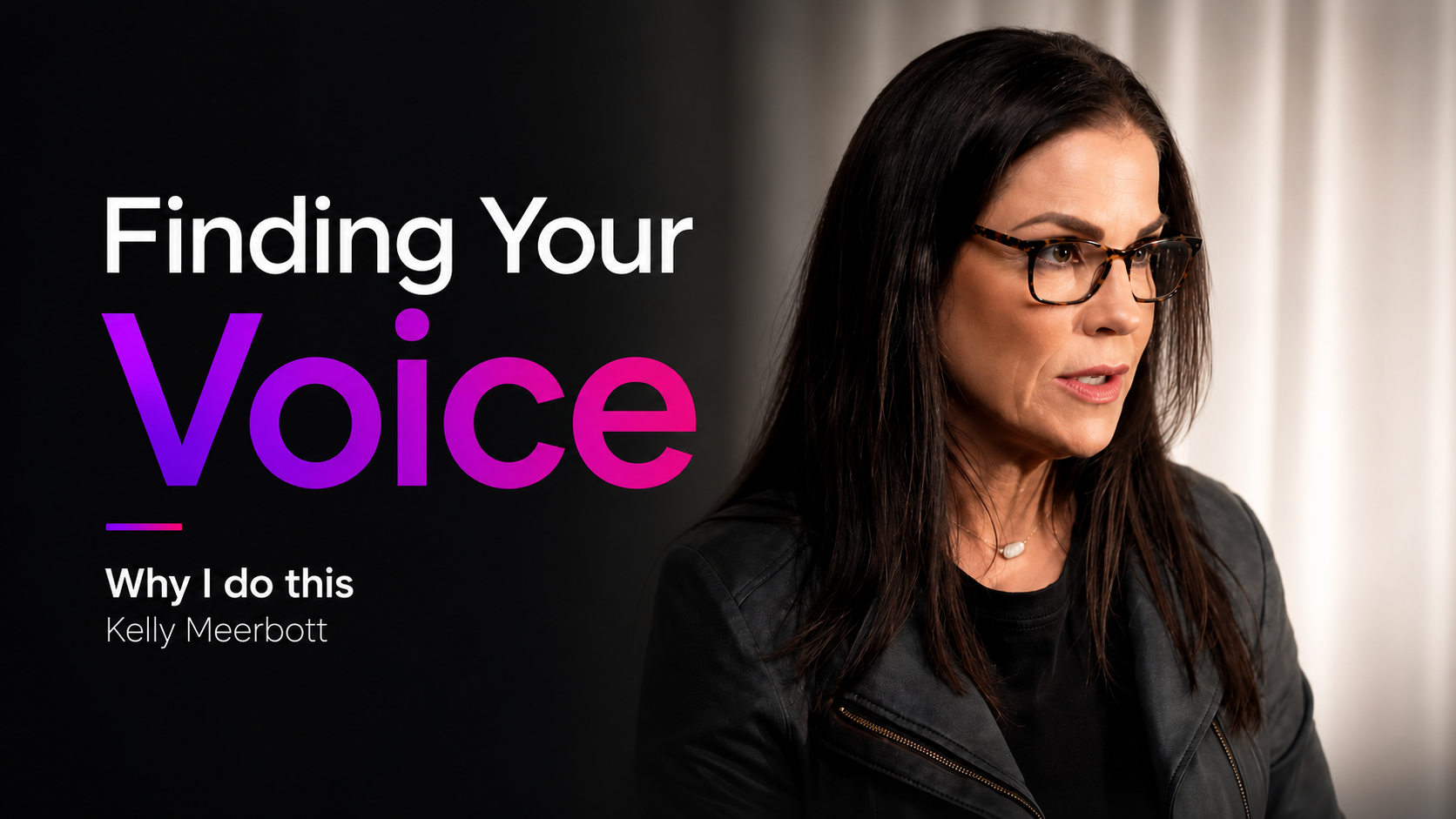
Kelly Meerbott has coached more than 400 senior leaders — C-suite executives, four-star generals, Fortune 500 teams, founders scaling to nine figures. She holds credentials from the International Coaching Federation, trauma specialist certification from the Arizona Trauma Institute, and post-graduate work from Case Western, Princeton, and Penn. She has a TEDx talk. She has a podcast. She has a speaker fee in the range of $20,000–$30,000.
None of that is what makes her compelling.
What makes Kelly compelling is that she has been through it. Laid off at the height of the recession. A marriage to a deployed veteran. A personal reckoning with victimhood that she'll tell you about plainly, without drama, because she believes that's the only way it's useful to anyone. She built her entire practice — YOU: Loud & Clear — on the conviction that the lessons she learned the hard way don't have to cost her clients the same price.
The challenge was getting that on screen.
The Challenge
Leadership coaches are one of the most crowded, noisiest categories in professional services. Everyone has a framework. Everyone has a testimonial. Everyone says they'll meet you where you are and take you somewhere better.
Kelly's differentiator isn't her methodology. It's her. The fact that she means it. The fact that when she sits across from a four-star general who hasn't slept in weeks and doesn't know why he keeps doing this, she can say something true that lands — because she's been in the dark herself and found her way out.
A credential list doesn't communicate that. A talking-head testimonial barely does. The question wasn't what to say about Kelly. It was how to let the audience feel who she is before she ever walks in the room.
What We Uncovered
The line that cracked the video open was this: "I've overcome things in my life to help people not suffer unnecessarily."
That's not a positioning statement. That's a worldview. It tells you the coaching isn't academic — it's earned. It tells you the clients aren't case studies — they're the reason.
From there, the through-line became clear. Kelly's work with the military gave us the sharpest illustration: senior leaders who had given decades, limbs, and relationships to an institution and no longer knew why. The question Kelly brings to that room — what is the space between what happens to you and how you choose to respond? — is Viktor Frankl made practical. It's heavy enough to matter and simple enough to use.
We built the video around that. Not her bio. Not her client list. Her why — in her own words, unscripted and direct — with enough specificity that the right client watching it would lean forward and think: she's talking about me.
The Result
The right video for a coach like Kelly doesn't just explain her work. It does her work — it creates the space where a potential client starts to recognize themselves.
That's the only result that matters.
Clarity Has
No Accent
How a B2B Tech Founder Turned Reluctance Into His Most Powerful Outreach Tool
The Situation
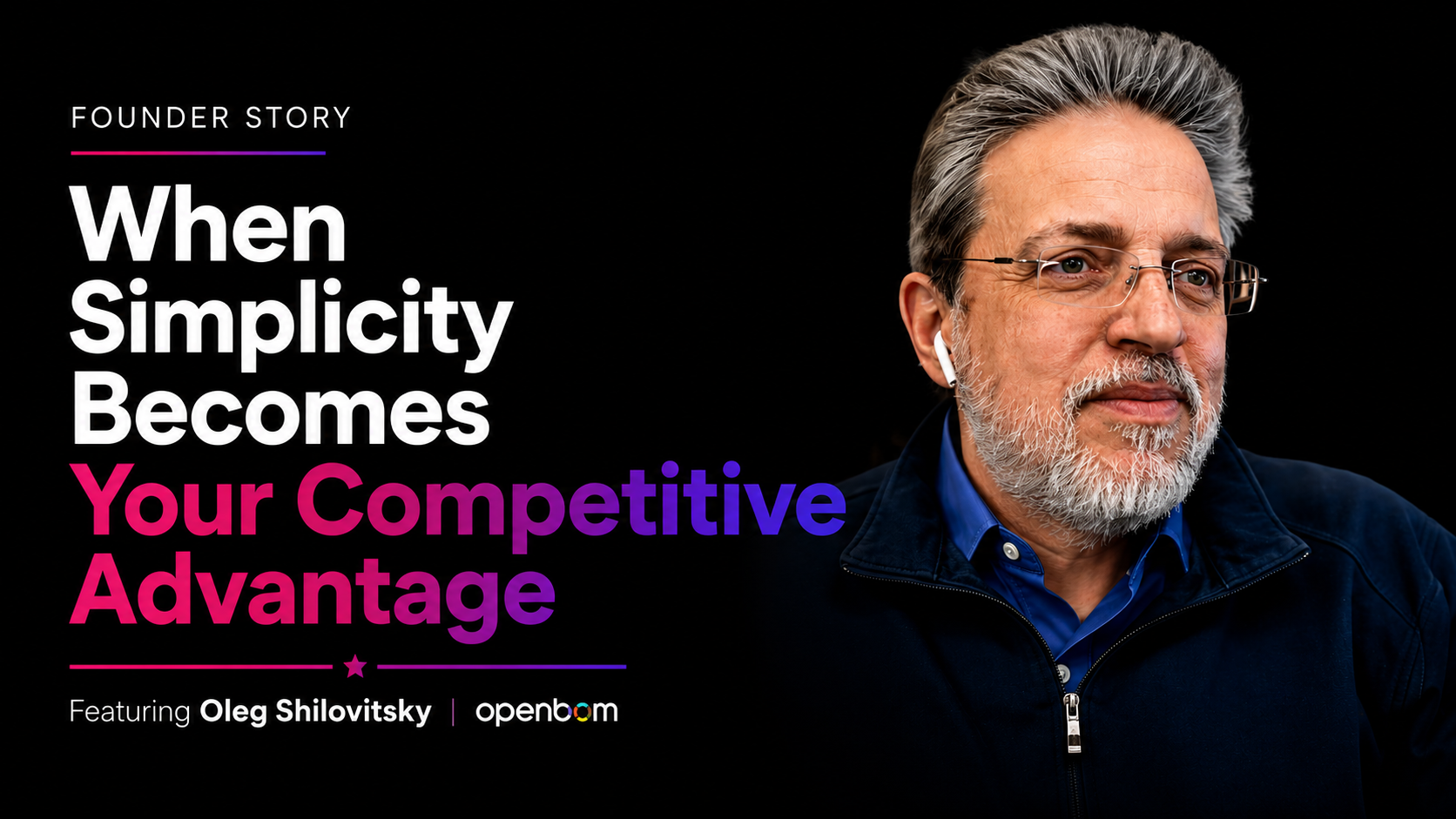
OpenBOM is a cloud-native platform that manages product data — bills of materials, engineering changes, supplier information, supply chain networks — for manufacturers and engineering teams across the world. Its founder, Oleg Shilovitsky, has spent 25 years building software for some of the most complex environments in manufacturing. He has worked at Dassault Systèmes, Autodesk, and the companies they acquired. He writes one of the most widely read blogs in engineering and PLM software. He knows the industry as well as anyone alive.
What he didn't have was a video. And he wasn't sure he wanted one.
The Challenge
Oleg's hesitation was specific: his accent. English is not his first language, and he was concerned that it would undermine his credibility with a predominantly American audience — that people would hear how he speaks before they heard what he was saying.
It's a real concern. And it's also exactly the wrong frame.
The challenge wasn't accent. It was clarity. B2B enterprise software is one of the most crowded, jargon-saturated categories in tech. Everyone solves complexity. Everyone promises simplicity. Everyone talks about digital transformation until the phrase means nothing.
What OpenBOM actually does — and what Oleg actually believes — is specific enough to cut through all of that. But it had never been said out loud, on camera, by the person who built it. The company was reaching prospects through content and reputation, but there was no human face at the center. No voice. No moment where a potential customer could look at the founder and think: this person understands my problem.
What We Uncovered
The conversation that cracked the brief open was about authenticity. Oleg's accent isn't a liability — it's evidence. It tells you that this is someone who came from somewhere, built something from the ground up, and has earned the right to speak plainly about a hard problem. The goal wasn't to minimize it. It was to make sure what he said was clear enough that nothing else mattered.
And what he said was worth hearing. The insight at the heart of OpenBOM — that simplicity is hard, that most enterprise systems fail because they mistake complexity for capability — is a genuinely useful idea. So is the principle that listening to customers and holding to a vision aren't opposites. That combining those two things is where the real work lives.
We built the video around Oleg's voice, his directness, and those ideas. Not a product demo. Not a feature list. A founder explaining, in plain language, why he built what he built and what he believes about the problem it solves.
The Result
The video has become the centerpiece of OpenBOM's outreach — the first thing a prospect encounters, the thing a sales conversation can now point to. What started as a reluctant first step became the clearest expression of what the company is and who it's for.
Clarity, it turns out, has no accent.
The
First Call
What It Means to Be the Person a PR Agency Trusts With Everything
The Situation
Rick Markovitz has spent decades in entertainment marketing and communications. As President of Weissman/Markovitz Communications, he moves between film, television, nonprofits, and brands — forging connections between people, stories, and media in one of the most competitive markets in the world. He knows what good storytelling looks like. He also knows how rare it is.
When Rick needs video strategy and storytelling for his clients, he makes one call.
The Challenge
A PR agency brings in outside collaborators when the work demands it. But finding someone you trust enough to call every time — for every kind of project, every kind of client, every kind of brief — is a different problem entirely. It requires someone who can move between worlds without losing the thread. B2B one week, B2C the next. A film campaign, then a nonprofit, then something that's both.
The challenge isn't any single project. It's being the person who can walk into any room Rick sends them into and deliver.
What We Built
Across years of collaboration, the range has been the point. Films. Television. Nonprofits. Hybrid campaigns that don't fit a clean category. Projects where the raw material is hours of complex audio and visual content that has to become something clear, compelling, and under two and a half minutes.
What stays consistent across all of it: the approach. Listen first. Understand what the client actually needs — not just what they've asked for. Then bring ideas to the table that move the needle. The production is the last step, not the first.
What makes this kind of collaboration work isn't just skill. It's discretion. When an agency brings in an outside partner, the relationship only works if that partner understands the dynamic — the agency is the face, the trusted advisor, the one with the client relationship. Our job is to make the agency look extraordinary, stay completely out of the way, and never once make the client feel like there's a stranger in the room.
Rick understood from the beginning that we operate this way. That's why the calls keep coming.
The Result
One relationship. Years of trust. A body of work that keeps growing because the first one worked.
When History
Is the Story
How a 100-Year-Old Mental Health Organization Found Its Voice at the Most Important Moment in Its History
The Situation
Wellnest has been showing up for Los Angeles families since 1924. That's not a typo. One hundred years of mental health services — through the Depression, through deinstitutionalization, through every wave of crisis the city has thrown at its most vulnerable residents. They started with seven employees at the Anita Baldwin Hospital for Babies. Today they have 300, with more than 273,000 client engagements annually across LA County.
For their centennial gala, they needed a video that could carry the weight of that legacy — and inspire the donors in the room to fund the next hundred years.
The Challenge
A milestone anniversary is one of the hardest briefs in nonprofit storytelling. The temptation is to go historical: archival photos, a timeline, a voiceover that sounds like a PBS documentary. It checks the box. It does not move people.
The real challenge wasn't capturing a century of impact. It was answering a harder question: What does a hundred years actually mean to a family sitting in a waiting room right now?
What We Uncovered
When we sat down with Wellnest, we kept asking a version of the same question: not what have you done, but what changes when you're there?
The answers came from the people Wellnest serves. A first-time mother navigating domestic violence, a son becoming nonverbal in the middle of her own upheaval, a young man who couldn't stay in college because he had nowhere to sleep. These weren't anecdotes. They were the throughline — the proof that a century of institutional commitment shows up, in the end, as one person's life going differently than it would have.
That became the emotional core of the piece: not the organization's history, but the history it creates in people.
The structure wrote itself from there. Open with a family in the middle of it. Let the weight of what Wellnest does land on the audience before you ever mention a year or a number. Then — and only then — pull back to show the scale. A hundred years. Three hundred employees. A city that has needed this, over and over, and found it.
Close facing forward. Because the ask isn't to honor the past. It's to build the next chapter.
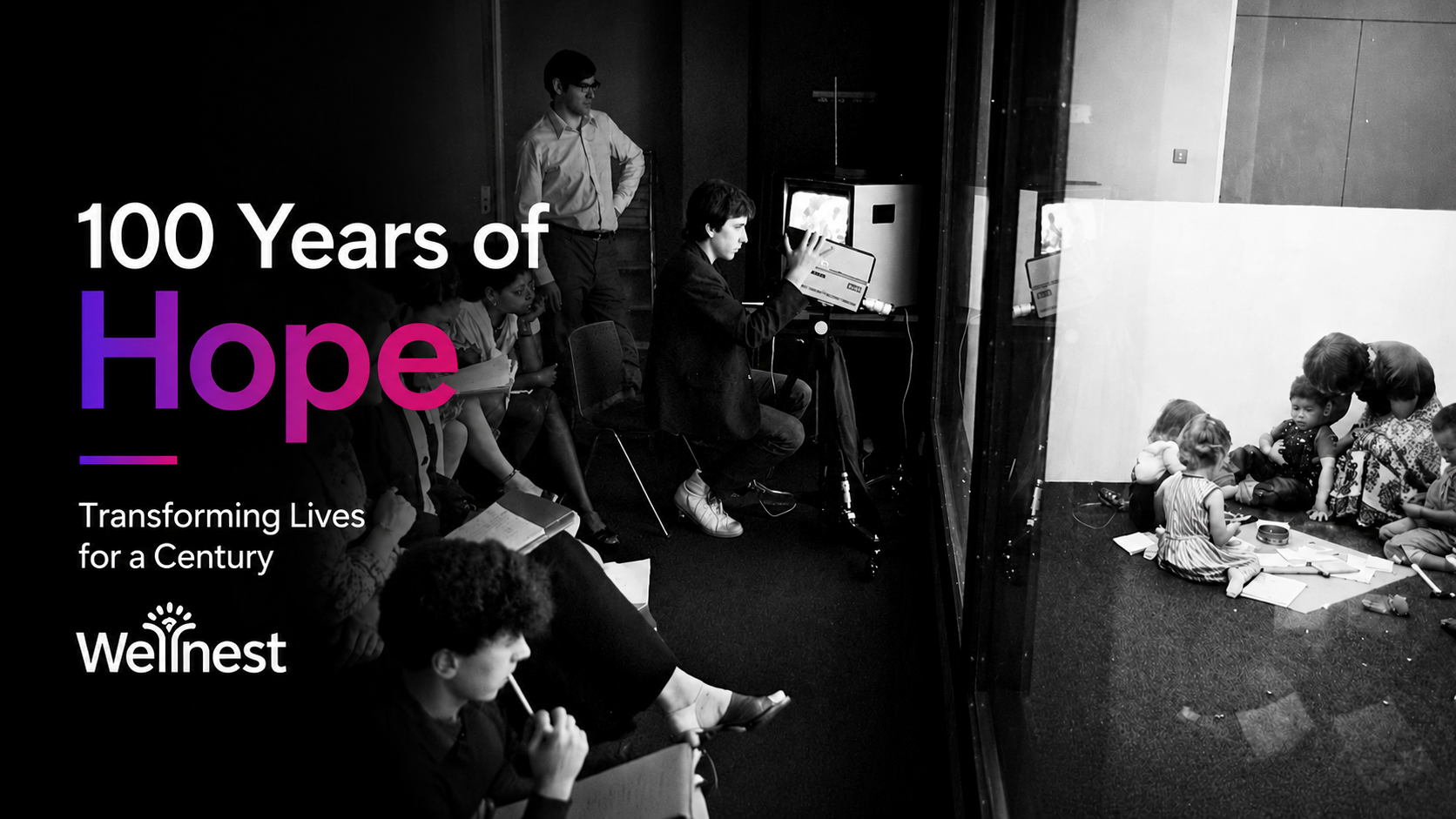
The Result
The video premiered at Wellnest's 100th Anniversary Gala to an audience of donors, board members, civic leaders, and community partners. It has since been placed on the Wellnest homepage, where it serves as the organization's primary public-facing introduction.
Some things don't need a metrics dashboard. A room full of people who just watched a mother describe choosing differently for her son — that's the result. The work speaks.
The
Standard
What a Decade With Disney Teaches You About Trust at Scale
The Situation
Disney doesn't hand over its productions to people it hasn't vetted. The brand is too valuable, the stakes too high, the margin for error too thin. When a Wonderful World of Disney project goes to Ireland to shoot a reimagining of Oliver — with Richard Dreyfuss and a young Elijah Wood on set — the person responsible for capturing the story behind the story isn't a hire. They're a trust.
That's where this started.
The Challenge
Behind-the-scenes content for a major studio production isn't documentation. It's positioning. It has to serve the film, serve the talent, serve the marketing machine, and do all of that without getting in the way of the production itself. You're embedded on set, working in real time, making editorial decisions that will shape how the world understands what's being made before anyone has seen a frame of it.
The challenge isn't technical. It's judgment. Knowing what to capture and what to leave alone. Knowing which moment tells the story and which one belongs only to the set. Knowing how to be present without being intrusive — and how to deliver something that meets Disney's standard when you leave.
What We Built
It started in Ireland on Oliver, on set with Dreyfuss and Wood, embedded in a full Wonderful World of Disney production. Everything was in scope: strategy, positioning, behind-the-scenes content from the ground up.
Then came more. Budapest. A Knight in Camelot. Other productions across the franchise, each one a full engagement — not coverage, but collaboration. Years of work, each project building on the last, the scope expanding because the work held up.
That trust eventually extended to key interviews and junket coverage across Disney's film slate — footage distributed to press outlets worldwide as the official record for journalists who weren't in the room.
The Result
A decade with Disney teaches you one thing above everything else: the standard is the standard. There's no version of the work that's good enough for right now but not good enough for the brand. You either hold the line or you don't get called back.
We kept getting called back.